Customer journeys that attract, keep and activate customers
How to map customer journeys, build data-driven personas and automate the follow-up, so you win the right customers, keep them longer and get more value from your marketing budget.
 Thibault Heyde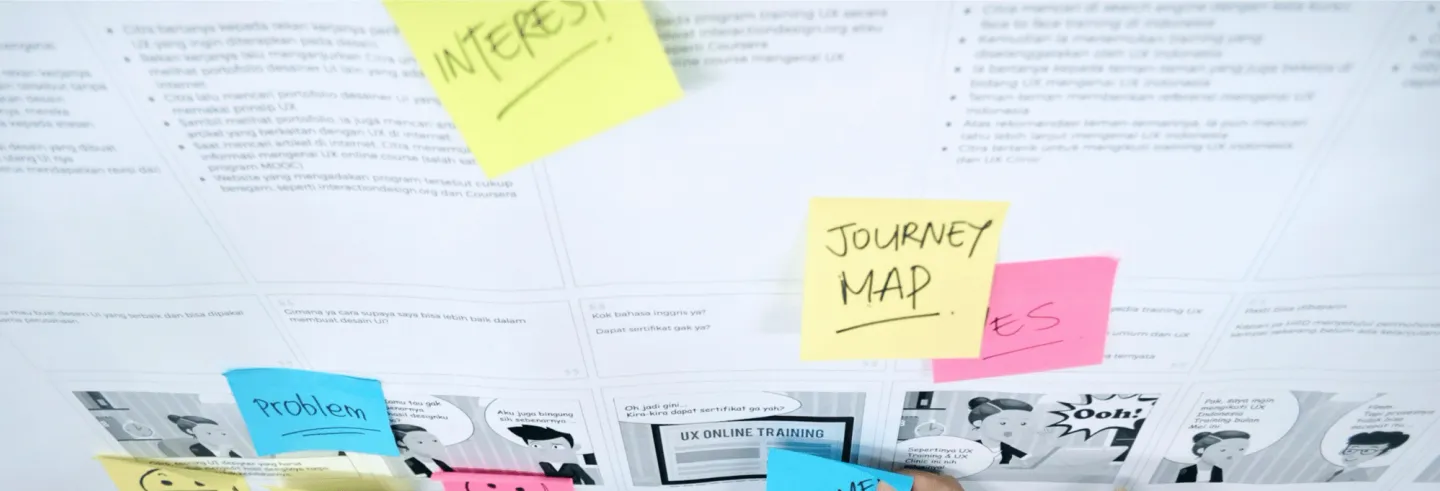
In short
- Map the journey with real behavioural data, not assumptions, and build personas around the people your offer is really for.
- Good automation is a living system: the right message, at the right moment, through the right channel, and less money spent on people who never convert.
- Measure what matters: customer lifetime value, cost per acquisition versus non-converting spend, and engagement.
Reaching new audiences, growing, and keeping the cost per acquisition under control at the same time: it is a balancing act that calls for a smart approach. In this article we look at how well-designed customer journeys and the right marketing technology help you make more impact.
We combine practical tips for marketers with strategic points for decision-makers. Only when both are aligned do you build a brand that keeps growing.
Part 1: how do you attract the right customers?
Customer journey mapping: insights and tools
The customer journey is rarely a straight line. It often starts with a vague need or a spontaneous search and ends, ideally, in repeat purchases or brand ambassadorship. Mapping that journey shows you what is really going on for your audience. What triggers them? Where do they get stuck? And what information do they need to move to the next step?
Use a tool such as Miro to map the journey visually. Combine it with behavioural insights from tools like Hotjar, such as click and scroll behaviour on your website. That way your analysis rests on real digital behaviour, not only on assumptions. Want the bigger picture, such as buying behaviour or customer value? Then bring in data from your CRM or e-commerce platform too. Next, put those insights to work through a marketing automation platform such as Customer.io, Actito or Adobe Campaign. That gives you a solid basis for more relevant, data-driven communication.
Personas as a guide
A product or service almost always starts from a concrete need, and that need lives with a certain type of customer. In other words, your product already exists for a specific audience, even if that audience isn’t sharply defined yet. By making it explicit through data-driven personas, you can tailor your communication far more precisely. You don’t start from a fictional “average customer”, but from the people your offer is really meant for.
That doesn’t mean your current customers no longer matter. It does decide where your focus and value lie, and personas help you sharpen that direction. Look beyond basics like age, location or family situation, and ask:
- How much would they ideally spend with you?
- Which questions keep them awake at night?
- Which channels are they on, and which of those are right for you?
- What triggers them to act?
With those insights you build targeted customer journeys: from dynamic emails to personalised landing pages or ads that adapt to behaviour.
An example. Pebble helped a fashion retailer streamline its customer journeys with smart marketing automation. One of the central personas was Marie, a fashion-conscious woman in her fifties who likes to shop locally, appreciates personal style advice and responds to exclusive offers. Based on her profile, we set up a personalised email flow after her first purchase: a follow-up email with style tips matching what she had bought, an invitation to a VIP shopping evening in her favourite store, and later a reactivation email if she had been inactive for a while.
Working with personas like this makes your communication fit behaviour better, and it raises relevance and customer satisfaction, with more conversions as a result.
Part 2: how do you keep customers and raise their value?
From first click to returning customer
A strong journey follows the pace and the world of your customer. Take Marie again. Her journey could look like this:
- Awareness: Marie sees an article from e5 on Facebook: “5 style tips for a spring look that suits your figure.” She clicks through and finds an inspiring outfit guide.
- Consideration: after downloading the guide she receives a series of emails with style advice, testimonials from customers her age and a video in which a stylist shows outfits that match her taste.
- Conversion: she gets an invitation to a VIP shopping moment in her favourite store, including personal advice. Or she receives a time-limited discount code for an outfit that goes with her earlier purchases.
- Loyalty: after her purchase she gets a thank-you email with tips to keep her clothes looking good, an invitation to the customer programme and suggestions for matching items in the same style.
Automate smartly, personalise at scale
Good marketing automation is not something you set up once and forget. It is a living system that moves with your customer. By responding to behaviour and segmentation, you send the right message at the right moment through the right channel. Your communication stays relevant and you lower your NC-CPA: the money spent on people who never convert.
Smarter targeting means less waste.
Part 3: how do you get customers to act and buy again?
More customer value, less operational pressure
Many companies focus on lead generation but miss opportunities in follow-up and retention. By combining customer journey mapping with automation, you get more value from your marketing with less effort: less manual work, fewer inefficiencies, and more customers who go on to buy and then come back. It helps you to:
- Spend marketing budgets more precisely, investing in segments and messages that really pay off. At e5, marketing automation was used for audience-specific flows, including reactivation emails based on customer behaviour. The result was more response and higher relevance without extra campaign budget, because the message is tailored to the people who actually benefit from it.
- Raise customer lifetime value through personalised follow-up and repeat purchases. For Bel&Bo, Pebble built a complete reactivation flow in Adobe Campaign based on RFM segmentation. Less active customers received personalised nudges to buy again. That limited churn and raised the value per customer through smart follow-up.
- Take pressure off internal teams by automating repetitive processes, which frees up time for strategy and creativity. At Allianz, we set up a solution that lets non-technical teams send emails on their own through an integration between Adobe Campaign and Azure Blob Storage. Marketing and IT no longer have to set up manual campaigns: repetitive work is replaced by scalable workflows, while quality stays the same.
You can read more about these projects in our cases.
What to measure (and why)
Look beyond classic KPIs such as traffic or opens. The real impact shows in:
- Customer lifetime value (CLV): customers who stay longer and spend more are your biggest source of profit.
- Cost per acquisition (CPA) versus non-converting CPA: find out where budget goes up in smoke and where you can optimise.
- Engagement metrics: the higher your engagement, the better your chances of conversion. Think click rates, session duration or interaction on social channels.
Grow smarter with technology
Companies that actively manage their customer journeys and use automation see results faster. Research from McKinsey points the same way: organisations that optimise their journeys tend to convert better and spend less on running their marketing, while consistent, personal communication builds customer trust.
Making your marketing more efficient doesn’t have to be complicated. Map your customer journey clearly, understand behaviour and use automation strategically, and you take big steps forward.
For marketing teams, that means better results and less trial and error. For the C-suite, it means a scalable approach that makes growth possible without adding headcount.
If you’d like us to look at your customer journey with you, let’s talk.